.svg)
By 10 a.m. in August, a San Antonio bus stop can hit triple digits. The metal bench is too hot to sit on, and the surrounding concrete continues to absorb and radiate heat throughout the day. For many riders, waiting for the bus means spending time in a small, man-made hot zone, a challenge shared by cities across the country.
That's the urban heat island effect. Cities trade grass and tree canopy for asphalt, concrete, and rooftops. Those materials absorb heat all day and release it for hours after sunset. Grass and trees cool the air through shade and moisture, while hard surfaces retain heat long after the sun goes down. At the scale of a bus stop, these same conditions can influence the comfort of the rider experience.
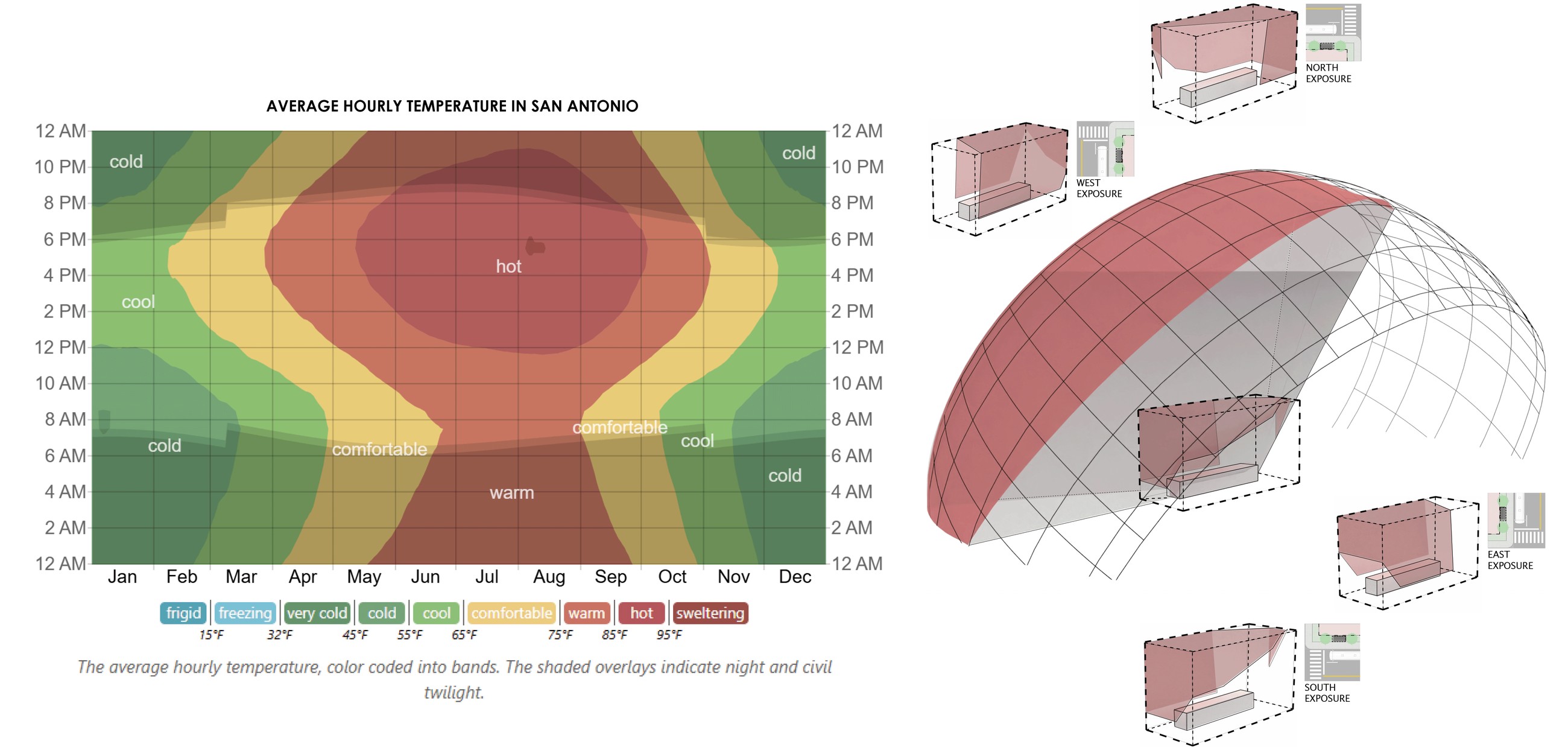
In collaboration with VIA and the City of San Antonio's Office of Sustainability, WestEast helped develop a shelter concept that explores new ways to reduce heat exposure for transit riders. The design combines several passive cooling strategies to enhance the performance of a traditional transit shelter. Each Heat Shelter is tailored to its particular site, providing shade where it's needed most throughout the day.
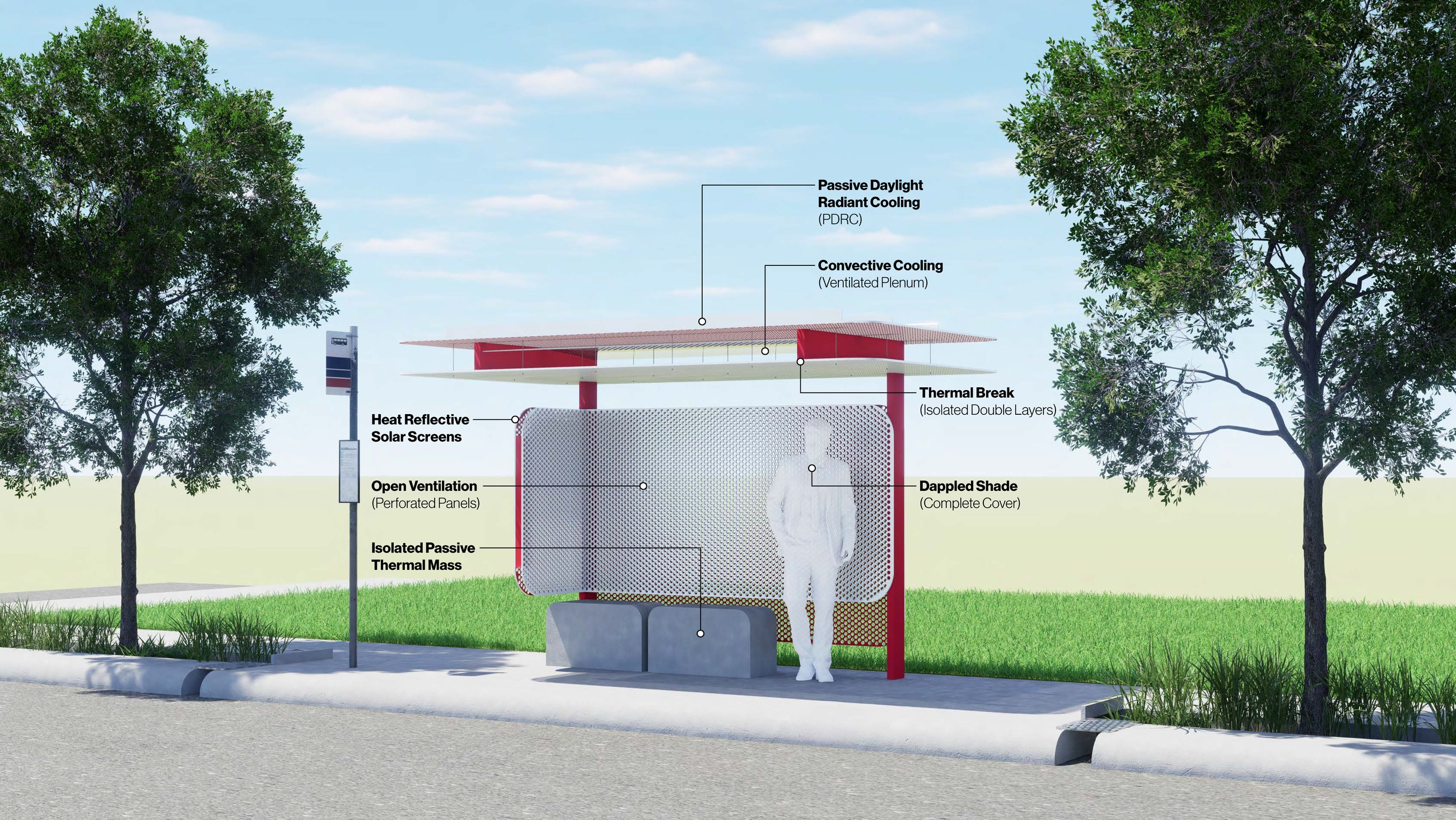
The roof is doubled, with an air gap that helps reduce heat transfer to the area below. Its reflective upper surface helps redirect solar radiation, while the open design allows warm air to rise and escape rather than become trapped beneath the canopy. Ventilated panels provide shade while still allowing breezes to move through the shelter. Beneath it all, shaded concrete-mass benches remain cooler and more comfortable for riders during the hottest parts of the day.
It's one bus stop, but it demonstrates how thoughtful, climate-responsive design can improve comfort in the public realm. Through a combination of shade, ventilation, reflective surfaces, and thermal mass, the Heat Shelter helps reduce heat exposure while creating a cooler, more inviting experience for transit users. As cities continue to adapt to rising temperatures, projects like this show how collaboration between transit agencies, sustainability leaders, and designers can create infrastructure that works harder for the people who use it every day.
.svg)
